A Window at Wing Height: Making Reflections Easier to See
A week of looking from a bird’s approach can reveal which panes mirror sky, foliage or a clear flight path—and suggest simple ways to make those surfaces more visible.
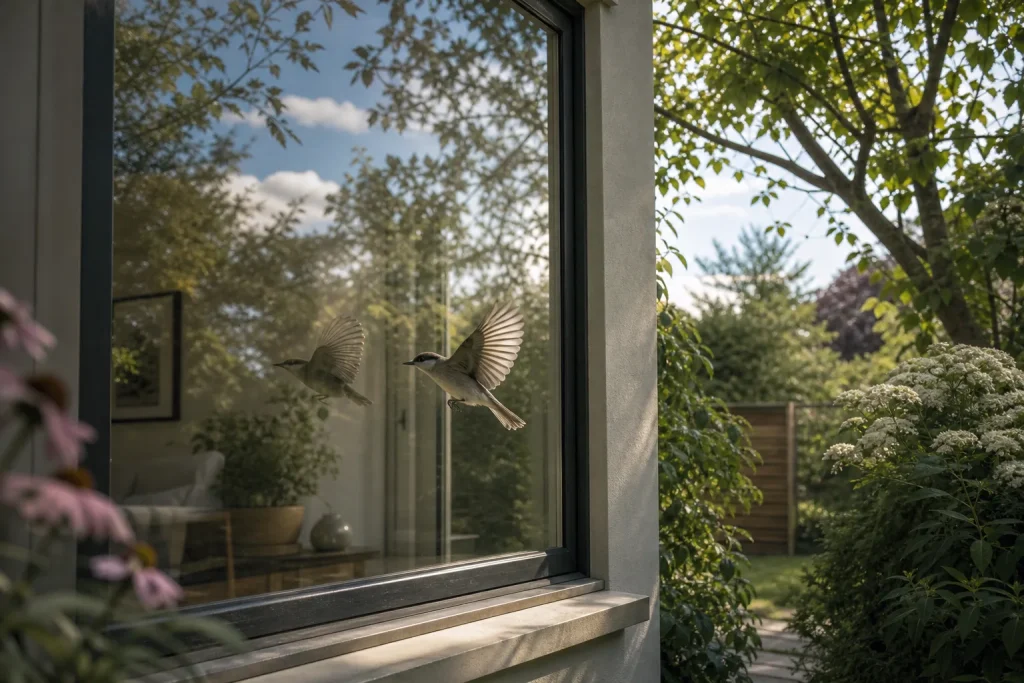
The common mistake is to inspect a window only from indoors, where reflections can seem faint or familiar. From outside, a pane may instead mirror open sky, a tree canopy or a route between garden cover and food; a bird approaching from that direction can encounter an apparent continuation of the space. A short, repeatable routine helps you spot those misleading views and choose changes that make the glass easier to perceive.
Begin with the view a bird approaches
Choose one or two windows that face a garden, patio or planted boundary. Look at them from several places a bird might come from: beneath a tree, beside a hedge, or across an open lawn. A reflection changes with the angle, so one look from the path is not enough.
Notice what the pane seems to show. Reflected branches can look like a perch; bright sky may read as open passage; and a reflection of shrubs can appear to carry a route through the wall. Also note what lies beyond the glass indoors. If the window lets you see through to a bright view on the other side, that apparent passage may be confusing from some angles.
Do this in ordinary daylight, then look again when the light changes. Morning and afternoon sun can make the same window show different things. You do not need to watch continuously: a few calm checks at times you are already outside are enough to build a useful picture.
Use the first day to find reflective panes
Walk the garden perimeter and pause at likely approach points. Include large living-room panes, glazed doors and windows near feeders, shrubs or trees. A smaller pane can matter too if it faces a regular flight route.
For each window, note the direction from which a bird might arrive and the main reflected feature. A simple sketch is useful: mark the pane, the nearest cover and the reflected tree or open sky. This record is not a survey of every bird in the garden; it is a way to remember where the glass looks most like habitat.
If you see a bird strike or find one injured, give it space and avoid handling it unless necessary for immediate safety. Contact a local wildlife rehabilitator or qualified wildlife professional for advice. Treat an incident as a prompt to reassess that particular pane and its approach angles, rather than assuming every window needs the same treatment.
Compare the view across the week
On the next few days, revisit the windows from the same positions. Check whether wind has moved branches, whether a curtain has changed the view through the room, and whether the sun now makes the pane more mirror-like. A note such as “maple canopy reflected from lawn side” is more actionable than a general impression that the glass looks bright.
Look for clear routes as well as reflected objects. A bird may fly between a feeder and a shrub, or follow a hedge towards a garden boundary. If that path points towards a pane, consider whether the glass appears to extend the route or conceal a barrier. Keep your observation simple and specific: direction of approach, what the window seems to show, and when that view is strongest.
Say you notice that a kitchen pane reflects a dense shrub when viewed from a gap in the hedge. You note the approach from that gap and check the pane again later, when the sun has moved. If the shrub remains prominent, you could place a visible marker on the outside of the glass at that sightline, then step back to see whether it breaks up the leafy image.
Choose changes that make the glass legible
Once you know which panes and angles deserve attention, choose a treatment that makes the surface visible rather than simply hoping a bird will recognise it as a solid barrier. Exterior markings are generally more effective for this purpose than markings applied only indoors, because the outside reflection is what needs to be interrupted. Use products intended for window marking and follow their fitting instructions.
Options include closely spaced exterior dots, lines, decals or purpose-made screens. The important feature is a clear, repeated pattern across the area that looks like an opening, not a single decorative shape that leaves broad reflective spaces around it. Follow product guidance on spacing and coverage; do not assume that a few widely separated stickers will alter the whole pane’s appearance.
Exterior insect screens can make a window more visible and also soften reflections. A taut net or screen may suit some windows, but it should be fitted securely and kept in good condition. If fitting anything outside would be unsafe, awkward or likely to damage the frame, choose an interior option recommended for the window or ask a glazing professional about suitable alternatives.
Other adjustments can help with the view itself. Moving a feeder a short distance away from a pane, or positioning it close to a window only where an appropriate protective treatment is in place, can change the way birds approach. Keep shrubs from forming a direct, fast route towards the glass where practical, while retaining useful cover elsewhere in the garden. Avoid removing habitat simply to hide a reflection.
Check the result from the same approaches
After fitting a marking or screen, return to your original viewpoints. Look for whether the pattern is visible against both bright sky and reflected foliage, and whether the pane still seems to offer a clear path. Inspect at more than one time of day, since glare can obscure markings from particular angles.
If the treatment is difficult to see from the approach side, revise it in line with the manufacturer’s instructions or seek advice about a more suitable product. Keep an eye on weathering, loose corners and marks that have peeled away. A treatment that no longer covers the intended area may need maintenance.
Do not judge success only by whether you happen to see a bird change direction. Birds may visit at times you are not watching, and quiet weeks tell you little by themselves. The useful check is whether the glass is now more visibly a surface from the routes you identified.
Keep the routine modest and repeat it as needed
After the first week, make a brief check when seasons alter the view. Leaf fall can uncover panes that were screened by foliage; new growth can create fresh reflections; and a rearranged patio or feeder may change an approach route. Revisit the same viewpoints after any change to nearby planting or outdoor furniture.
There is little value in standing at every window every day, buying several kinds of treatment before identifying the problem, or trimming healthy plants simply because they appear in a reflection. Start with the panes that mirror a likely route, make one considered change, and check whether it improves visibility from the bird’s side.
Keep a small note with the window, approach direction, strongest reflection and treatment used. That record makes future checks straightforward and helps you spot when a seasonal change has altered the view. The aim is not to remove every reflection from a garden, but to make important panes easier to read as solid boundaries.
Nearby subjects
Twelve Slots Before the Relay Mission
The mission screen gives your three-player squad one clear task: restore a relay inside an abandoned…
Watching from the Path: A Quiet Distance for Garden Birds
Choose a viewing place that leaves birds’ familiar routes open, then let their behaviour—not a fixed…