The Empty Nest Box: What to Notice Between Seasons
An unused nest box can offer clues about its visitors and condition, but careful observation matters more than opening it. Compare what you can learn from watching outside, checking it at the right time, or leaving it alone.
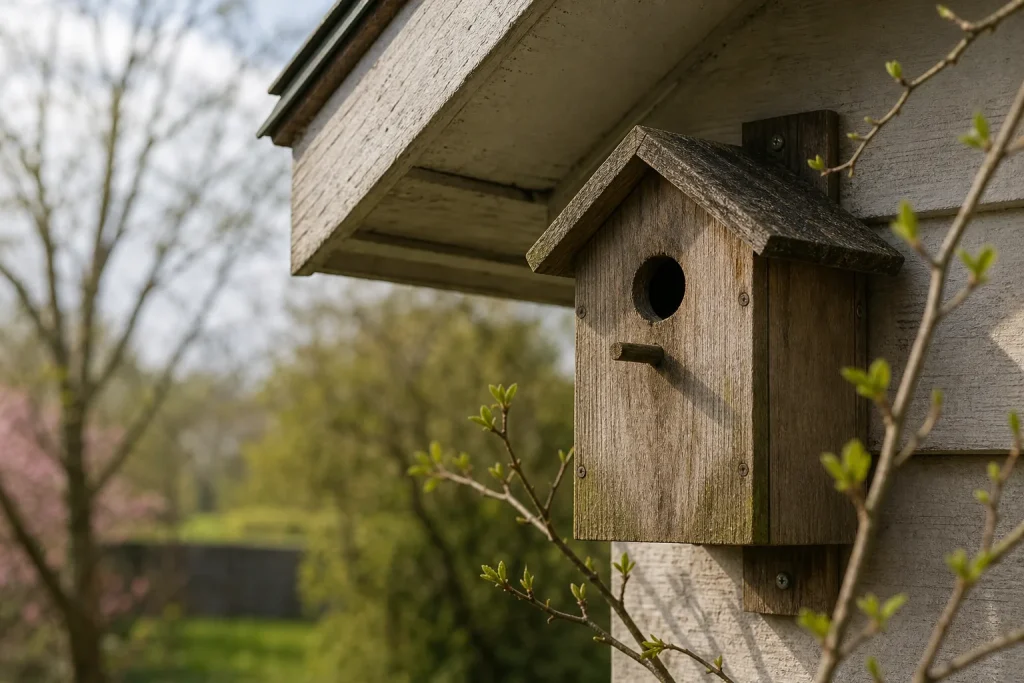
The common mistake with an apparently empty nest box is to open it as soon as the birds stop visiting. That can disturb late young, other wildlife using the cavity, or nesting material that still contains evidence worth observing. From outside, you can often learn enough to decide whether a later inspection is appropriate.
Between breeding seasons, a box can reveal which entrance birds used, whether they carried material, and how the structure has weathered. These clues are not a certain record of who nested there: a bird may inspect a box without settling, and other animals may use it. Choose an approach that fits what you want to know and how confidently you can judge that the box is unoccupied.
Watching from outside protects the box’s occupants
External observation means looking at the box from a respectful distance without touching it. Note the entrance, nearby branches, fresh-looking material at the opening, and whether birds repeatedly carry nesting material or food inside. A single visit is easy to misread; a quiet pattern over time is more informative.
This suits anyone who wants to follow seasonal activity while avoiding disturbance, especially if the box is high up, difficult to reach, or likely to be used by birds that are hard to identify. A small notebook can help: record the date, weather in broad terms, what you saw, and where you stood. Binoculars may help you see activity without approaching the box.
Do not infer occupancy from an untidy entrance alone. Wind can shift loose material, and old debris may remain long after use. If you see repeated entries, food deliveries, alarm behaviour, or young at the entrance, leave the box alone rather than trying to confirm what is inside.
A later inspection can answer questions about condition
Opening a box can show whether it contains old nesting material, damp debris, or signs of damage. It can also help you judge whether the entrance, roof and fixing need attention before the next nesting period. This approach suits a box you manage and can inspect safely, provided local guidance and the season make an inspection appropriate.
Timing matters more than curiosity. Do not open a box during active nesting or while you have reason to think young may still depend on it. If you cannot tell whether it is in use, wait and seek advice from a local wildlife organisation or a knowledgeable bird group. Rules and recommended practice can vary by place and species.
When an inspection is appropriate, work calmly and keep it brief. Use a stable ladder only if you can do so safely; otherwise, ask someone competent to help or leave the box in place. Wear gloves, avoid breathing dust, and do not handle eggs, young, or wildlife. If you find an animal, close the box without disturbing it and contact a qualified wildlife professional for advice.
Say you have a box under the eaves and notice that a pair of birds entered it repeatedly earlier in the season. Later, there is no visible activity, but you are unsure whether the nesting attempt finished. The sensible choice is to keep observing from the ground and postpone opening it; if signs of activity return, you can leave it undisturbed, while a later quiet period may make a condition check appropriate.
Leaving the box untouched is a valid choice
Not every box needs an annual inspection. If it is sound, dry, securely fixed and not causing a problem, leaving it alone avoids needless disturbance. This option suits a box whose recent use is unclear, one that is awkward to reach, or a garden where careful observation is the main aim rather than maintenance.
There are limits to what an untouched box can tell you. You may see that birds visited, but not whether they nested successfully or what remains inside. Accepting that uncertainty is preferable to opening a box at the wrong time. If the box appears loose, cracked, or exposed to water, address the safety issue only when it is safe and appropriate to do so.
What is not worth the effort is repeatedly approaching the entrance to check for signs, tapping the wood, or setting up a camera close to the box simply to settle a hunch. Those actions can alter the birds’ behaviour while adding little reliable information. A quiet view from a regular, distant spot is usually the better method.
Choose by the question you need to answer
If you want to know whether birds are using the box now, observe from outside and keep your distance. If you want to assess wear or prepare a box for future use, consider a brief inspection only when you are confident it is unoccupied and can reach it safely. If either condition is uncertain, leave it alone and ask a local wildlife organisation for guidance.
Whichever option you choose, treat what you notice as clues rather than a complete account. A clean entrance does not prove the box was unused; old material does not identify its builder; and silence does not always mean every animal has left. The useful habit is to record what you can see, resist filling gaps with guesses, and let the box remain a refuge when its status is uncertain.
Before the next nesting season, look from the ground for a secure fixing, a clear approach and shelter from driving rain. Make any needed repair during a suitable quiet period, not while birds are active. That simple timing decision can leave the box ready for another season without turning observation into disturbance.
Nearby subjects
Twelve Slots Before the Relay Mission
The mission screen gives your three-player squad one clear task: restore a relay inside an abandoned…
A Window at Wing Height: Making Reflections Easier to See
A week of looking from a bird’s approach can reveal which panes mirror sky, foliage or…