Bare Ground, Leaf Litter, and a Beetle’s Way Through
A small, undisturbed patch of soil and fallen leaves can give beetles and other invertebrates shelter and room to forage, without turning the whole garden untidy.
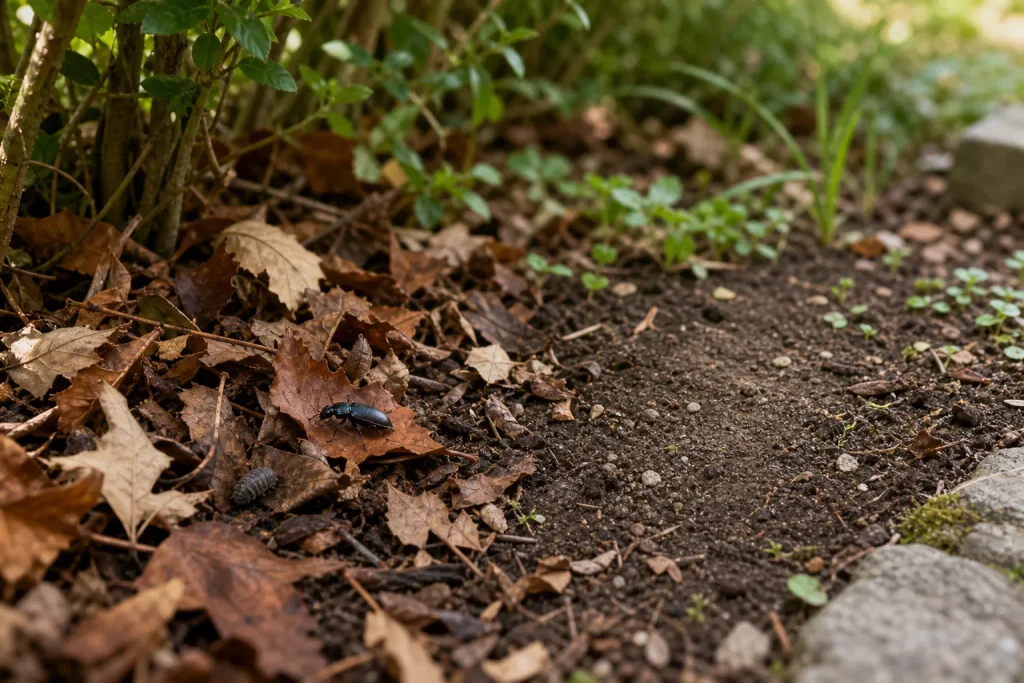
The common mistake is to rake every fallen leaf into a bag and leave the soil beneath it bare. That removes shelter and feeding material in one sweep, leaving small invertebrates more exposed to drying, cold and disturbance. A modest patch of leaf litter, with some open ground beside it, can offer a more useful mix.
What does leaf litter offer to beetles?
Leaf litter is the layer of fallen leaves and other plant debris on the soil surface. It gives beetles and many other small invertebrates places to hide, move through and search for food. Some beetles feed on decaying material; others hunt the tiny animals that gather among it.
The leaves also soften the boundary between open air and soil. They can shade the surface and slow its drying, while gaps between leaves provide routes and hiding places. The precise benefit depends on the species and conditions, so it is best to think of litter as useful structure rather than a guaranteed source of any particular wildlife.
Why leave some soil bare?
A patch of bare ground adds a different kind of access. Beetles can cross it, forage along its edges or reach the soil without pushing through a thick layer of leaves. Some ground-dwelling invertebrates prefer open or lightly covered surfaces, and a mix of conditions is more accommodating than a uniform mat.
“Bare” need not mean compacted, scraped clean or exposed across the whole garden. Aim for a small area of unmulched soil beside leaf litter, perhaps at the foot of a hedge or near a quiet border. Let the soil surface remain as undisturbed as practical rather than cultivating it to make it look tidy.
Where should I place a patch?
Choose a spot where leaves can stay put without blocking a path, drain, doorway or regularly used seating area. The base of a hedge, the sheltered edge of a shrub border or a quiet corner beneath a deciduous tree can work. A nearby mix of plants, soil and cover gives small animals more than one surface to use.
Consider how the spot behaves through the year. A patch that is shaded for part of the day may retain moisture better than a hot, exposed corner, but persistently waterlogged soil is not the same as gently damp ground. Avoid placing litter against timber structures or in a place where it will routinely be trampled or swept away.
How much space does this need?
There is no required garden size. Even a modest, clearly bounded patch can preserve a little leaf cover and undisturbed soil, while a larger garden can hold several small patches with different degrees of shade. What matters is leaving the chosen area alone often enough for its surface to remain varied.
If you want a tidy edge, use a few stones or a simple line of untreated edging to mark the boundary. Keep the border loose rather than sealing the patch beneath plastic or landscape fabric. You do not need to build a special insect hotel: the soil, leaves and existing plants provide the habitat this approach is meant to retain.
Which leaves should I use?
Leaves that have fallen naturally in your garden are a straightforward choice. A mixed layer from nearby trees can create a varied surface; if leaves are scarce, you can borrow a small amount from another part of the garden where they are abundant. Avoid taking leaf litter from woodland or public land, where it belongs to that habitat and may be protected by local rules.
Do not pile leaves into a dense mound simply to make the patch look substantial. A loose layer with spaces and some visible soil nearby is more useful than a wet, compressed mat. If the leaves are prone to blowing away, tuck a few beneath a shrub or lightly anchor the edge with small branches rather than covering the whole patch.
Should I add compost, mulch or chemicals?
Usually, no extra treatment is needed. The point is to retain natural cover and avoid disturbing the soil, not to turn the patch into a managed feeding station. Leave out pesticides and slug pellets in the area, since they can affect animals beyond the intended target.
Finished garden compost may be useful elsewhere, but it is not a substitute for fallen leaves and open soil. Likewise, a thick layer of bark mulch can change the surface and may obstruct the bare-ground area you meant to preserve. Keep the patch simple, and add material only when there is a clear reason to do so.
How do I keep the patch without making the garden messy?
Set a modest boundary and decide in advance what needs to stay clear. You might keep leaves off the path and away from drains while leaving them beneath a shrub. That makes the untidy-looking part intentional, rather than allowing debris to spread into places where it causes a nuisance.
Say you have a small border beside a paved path and usually rake it clear each autumn. You could leave a loose strip of leaves under the hedge, keep the paving swept, and leave a nearby patch of soil unmulched. The expected observable result is a sheltered strip with some exposed soil and a clear path; you can check the surface occasionally without turning it over.
It is not worth buying decorative ornaments, repeatedly rearranging the leaves, or inspecting the patch every day. Those efforts do little to improve cover and can disturb the very area you are trying to leave alone. A quick visual check when you are already tending the garden is enough for ordinary upkeep.
When should I clear or disturb the patch?
Clear only what creates a practical problem, such as leaves blocking a drain or collecting where they must not build up. Move that material gently to another suitable part of the garden if one is available. Before raking, digging or cutting back plants, look for animals and avoid disturbing a cluster or sheltering creature.
Garden work sometimes requires more than a light tidy. If you are removing a hedge, digging a substantial area or dealing with a protected species, pause and seek appropriate local guidance rather than assuming the patch is empty. For routine care, small, occasional adjustments are preferable to regular turning or clearing.
How can I tell whether the habitat is useful?
Look for the habitat features first: leaves remain in place, some soil is still open, and the area is not regularly trampled or sprayed. You may notice beetles, woodlice, spiders or other small animals, but their absence during a brief glance does not show that the patch has failed. Many invertebrates shelter out of sight, and activity changes with weather and season.
If you want to observe, watch from the edge at a quiet time rather than lifting every leaf. A torch can help you see the surface without digging, but avoid prolonged disturbance. The most useful sign is often not a dramatic sighting; it is that the patch continues to offer a range of sheltered and open places through changing conditions.
What if the patch attracts unwanted visitors?
Leaf litter can also provide shelter for animals some gardeners would rather not encounter, and a damp corner may not suit every garden. If the area causes a specific problem, reduce or relocate it rather than spreading chemicals broadly. Keep it away from entrances and places where leaves interfere with drainage, and follow local guidance if you are concerned about a particular species.
A small patch is an invitation to share a little space, not a promise that only welcome animals will use it. You can choose its location and keep the rest of the garden managed to suit your needs. Leaving one quiet corner undisturbed is a practical compromise between a neat garden and a garden with more than one kind of shelter.
Nearby subjects
Twelve Slots Before the Relay Mission
The mission screen gives your three-player squad one clear task: restore a relay inside an abandoned…
A Window at Wing Height: Making Reflections Easier to See
A week of looking from a bird’s approach can reveal which panes mirror sky, foliage or…